
Article: Natural vs Synthetic: What’s Really in Your Perfume?
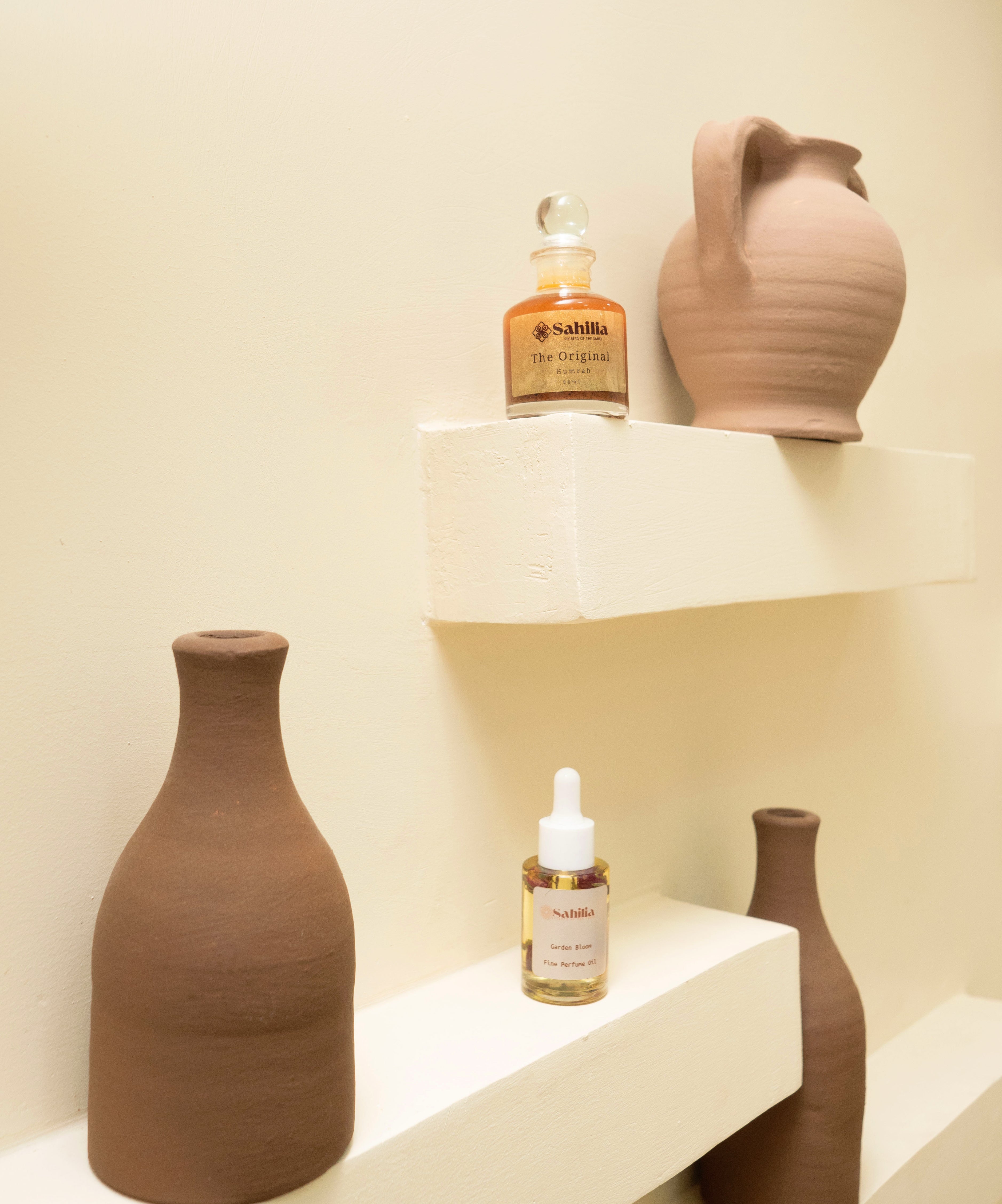
Natural vs Synthetic: What’s Really in Your Perfume?
Every few months, a new headline appears “Toxic perfumes you should avoid.”
Scroll a little further and you’ll see the opposite: “Why synthetic fragrances are perfectly safe.”
If you love perfumes but also care about what goes on your skin, it’s confusing.
There’s so much noise online “clean,” “natural,” “non-toxic” that it’s hard to know what’s real and what’s just marketing 😩.
So I decided to take a step back and ask the question we’ve all wondered:
Are natural perfumes really safer than synthetic ones?
And if not, what should we actually be looking out for?
Natural vs Synthetic: What’s the Difference?
Let’s start simple.
Natural ingredients are extracted directly from plants, flowers, resins, or fruits things like rose oil, sandalwood, jasmine, or patchouli.
They carry the essence of the earth, and in many ways, they’re the origin of perfumery.
Synthetic ingredients on the other hand, are created in a lab. Some are designed to imitate natural smells (like vanilla or musk), and others are completely new notes that don’t exist in nature at all.
For a long time, people have thought “natural” automatically means safer. But that’s not always true.
Some natural oils like citrus or cinnamon, can irritate sensitive skin or cause reactions when exposed to sunlight. on the other hand not all synthetics are bad either; in fact, many are safer, more stable, and more sustainable.
For example:
Iso E Super and Ambroxan are clean, skin-safe molecules that add warmth and depth.
Synthetic sandalwood helps protect endangered sandalwood trees.
Musk notes today are made in labs not from animals and are far more ethical.
So rather than natural vs synthetic, the real question is: how carefully is your perfume made?
So What’s Actually Harmful You Ask?
Here’s where the science matters.
Some ingredients both natural and synthetic can act as endocrine disruptors, which means they interfere with your body’s hormone system.
The most commonly discussed are:
Phthalates: These are used to make fragrance last longer. Some forms have been linked to hormonal disruption, therefore conscious brands now use safer alternatives like DEP-free formulations.
Nitro musks : These are old synthetic musks, now largely phased out due to environmental persistence.
BHA and BHT: These synthetic antioxidants used to prevent oxidation of the formulation; can be irritating in large amounts.
Formaldehyde-releasing preservatives : Thankfully these are becoming rare in modern perfumery, but sometimes found in older or cheaper formulations (stay away from dodgy fakes).
As a consumer what does this mean??
It simply means that, as consumers, transparency matters. You should be able to know what’s in your perfume and how it’s made.
How to Choose a Conscious Brand
When it comes to fragrance, it’s less about fear and more about awareness.
Here’s what I personally look for and what we hold to heart at Sahilia:
✅ Transparency – Brands that share their full ingredient lists and don’t hide behind “fragrance” as a mystery word.
✅ IFRA compliance – Following international standards for perfume safety.
✅ Sustainable sourcing – Respecting both nature and the people behind it.
✅ Simplicity – Fewer ingredients, fewer irritants, and more clarity for your skin.
At Sahilia, our oils are built on this philosophy: simple, intentional, safe.
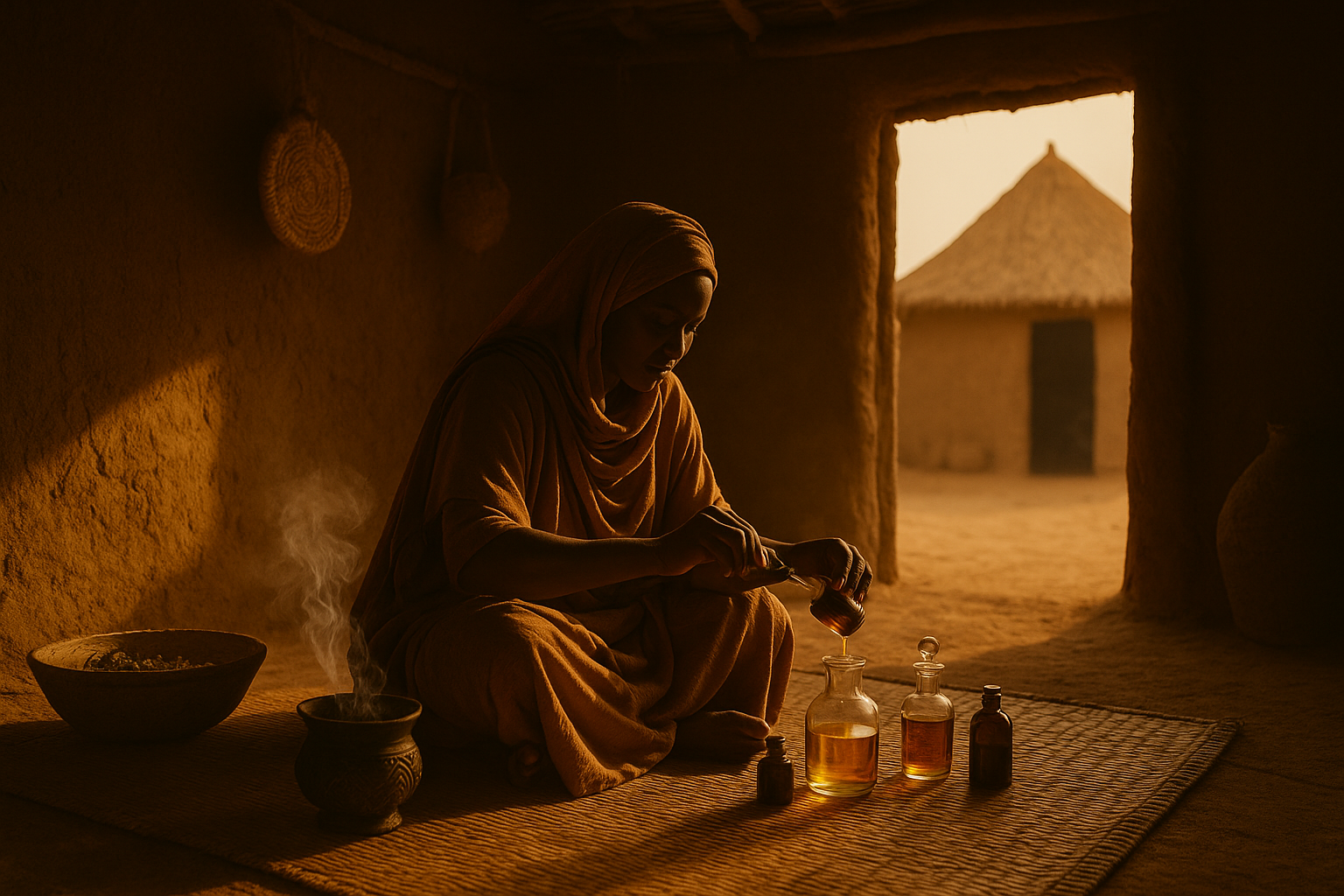
We use high-quality fragrance and essential oils, blended with nourishing carriers, tested for sensitivity, and inspired by the same slow beauty rituals I’ve witnessed across cultures from Northern Nigeria to Morocco.
🌸 So… Which Is Better?
Maybe neither.
Maybe both.
The truth is, both natural and synthetic perfumery have a place.
Natural oils give depth, soul, and connection to the earth.
Synthetics offer stability, safety, and innovation.
What matters most is not where the ingredient comes from, but how it’s used, why it’s chosen, and whether it honours your skin.
When done right, both can coexist beautifully.
That’s what I love about this craft, it’s not about perfection, it’s about balance.
Returning to Simplicity
When I visited the Berber women in Morocco, I watched them hand-press argan oil for everything, from skin, to hair, pain, dryness and headaches.
No chemicals, no preservatives, just what the earth gives, used with wisdom.
And that’s what Sahilia stands for:
taking what’s always worked, refining it with care, and sharing it in a way that fits our modern lives.
Simple bottles. Simple formulations. Simple rituals.
Because care doesn’t have to be complicated.
Maybe the real question isn’t whether your perfume is natural or synthetic ,
but whether it was made with care, intention, and honesty.
As you read labels and choose what goes on your skin this season, remember — care doesn’t have to be complicated.
It just has to be yours.
Discover your own ritual with our create your own bundle for upto 30% off made for the season of calm, clarity, and choice.
✨ Do you ever find yourself returning to what’s simple?

Leave a comment
This site is protected by hCaptcha and the hCaptcha Privacy Policy and Terms of Service apply.